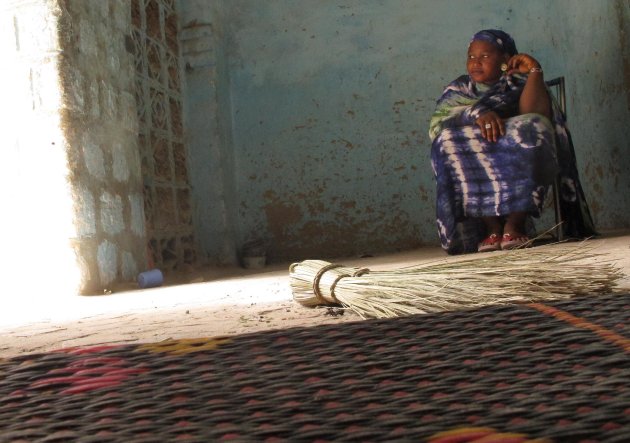
It all happened in Timbuktu Mali where extremist who controlled northern Mali since April applied a harsh brand of Shariah in the moderate Muslim region.
The fiasco began over the phone, when a stranger dialed the wrong number. It almost ended with the couple’s death at the hands of Islamic extremists who considered their romance “haram”, in other words – forbidden.
The man thought he was calling his cousin. When he heard Salaka’s voice, he apologized. 24-year-old Salaka’s voice was flirtatious, and her laugh betrayed her youth. They started talking, and for two weeks, they spoke nearly every day.
Finally, the man asked Salaka for direction to her house which she did not hesitate to give. The man arrived on his motorcycle.
He was older and already married. In a predominantly Muslim region, men can take up to four wives, so it was not a problem for Salaka. From the day he set his eyes on Sala, he ended phone conversations with the phrase, ‘Ye bani’, or “I love you” in the Sonrai language. Instead of calling her by her name, he called her “Cherie” which means sweetheart in French.
As their love affair grew more intense, so did the Crackdown by the Islamists in northern Mali. He showered her with gift and made her feel like a woman. By the time the first group of rebel fighters carrying the flag of the National Movement for the Liberation of the Azawad drove past her house on April 1, the two had been seeing each other for several months. The fighters in military uniforms made their goal clear: They wanted to create an independent homeland known as Azawad for Mali’s marginalized Tuareg people. Only days later, a different group of fighters arrived, wearing beards and tunics that looked like those common in Pakistan and Afghanistan. The color of their flag was black and they called themselves Ansar Dine, or “Defenders of the Faith”. They produce a pamphlet outlining how a woman should wear the veil, and whom she could and could not be seen with. One of them was Salaka’s boyfriend. He drove his motorcycle to her house to give it to her.
On the night of Dec. 31, the two left Salaka’s house on a motorcycle as usual. Then came the bearded men on foot. There were four of them, her lover jumped on his motorcycle and sped-off. He was the married one and would have paid the higher price.
They arrested and took her to the Islamic police headquarters, inside a branch of the local bank. They shoved her into the closet-like space where the ATM machine is located and locked the gate behind her. Later that day, the police transferred her to a prison they had set up just for women in a wing of the city’s central jail. For the next three nights, she slept alone on the on a hard floor in a large, cement room.
She was convicted of having relationship with a man who was not her husband and sentenced to 95 lashes.
They took her to the market at noon on Jan. 4, and made her kneel in a traffic circle. She was asked to remove her dress, leaving only the thin layer of fabric to protect her skin from whip. The executor announced her crime and punishment, after which they began to flog her.
They hit her so hard and for so long until she could feel the blood seeping through. When the whipping was over, they told her that if they ever saw her with a man again, they would kill her.
Her lover called as soon as she got home, but night she was caught, he ran away to Mali’s distant capital.

